
A Statement, Seven Countries, Zero Tools
THE SIGNAL | SUNDAY 3 MAY 2026

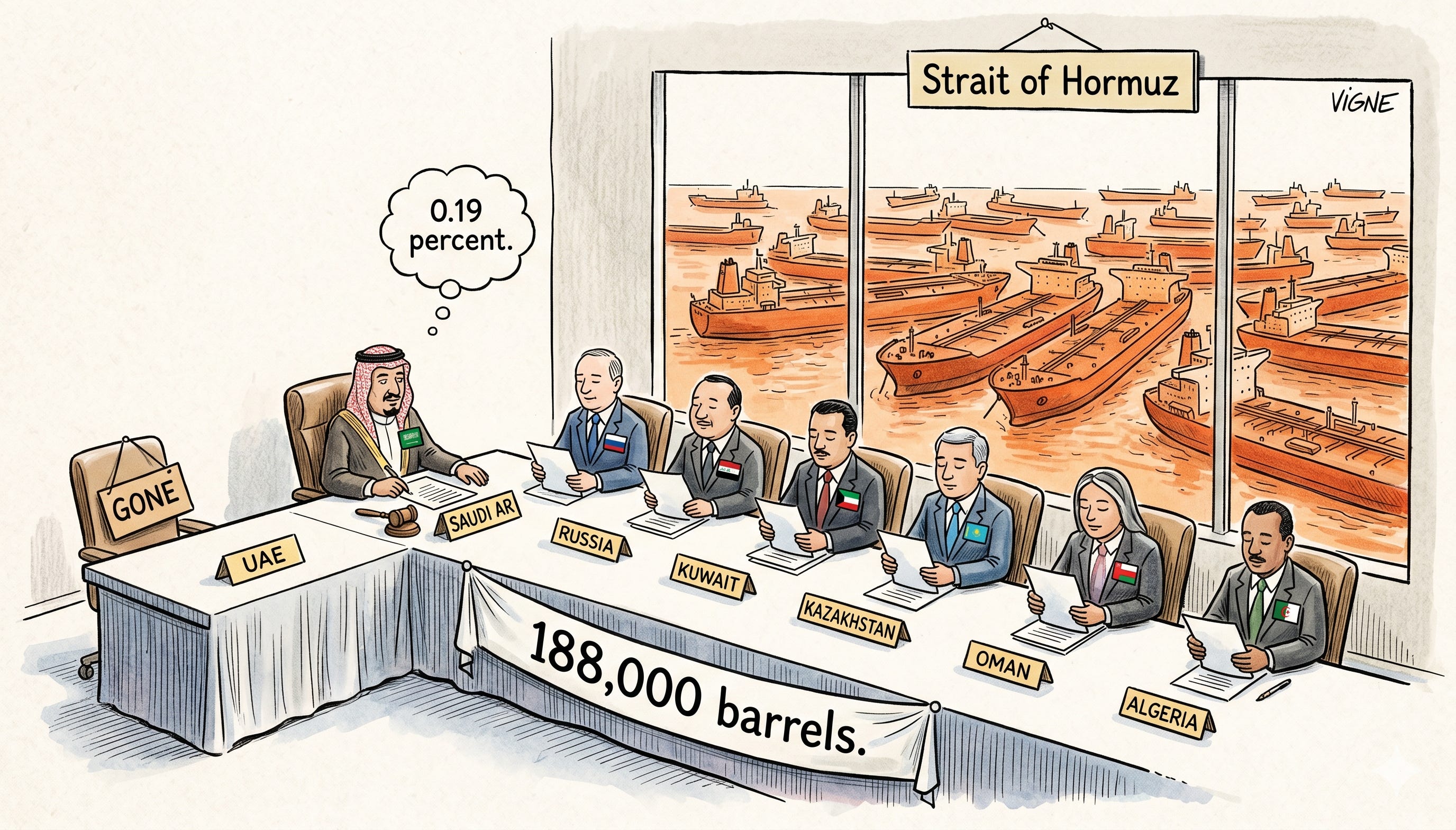
This morning, seven countries met virtually and agreed to a “production adjustment of 188 thousand barrels per day” for June. The statement mentioned no explanation of the Strait of Hormuz. It made no mention of the UAE, which left the cartel on May 1. It said nothing about the approximately 20 million barrels per day of global seaborne oil trade currently disrupted, rationed, or priced at war-risk premiums.
OPEC+ announced a June quota increase smaller than the cargo of a single VLCC on the same morning the global energy system was managing the worst supply disruption since the 1970s.
The document is not dishonest. It simply exists in a different reality than the market it purports to manage.
This piece is not going to revisit what OPEC is or how quotas work. What I want to look at is the harder question: what exactly is this institution doing in May 2026, for whom, and through what actual mechanism?
The numbers make the argument quickly. Saudi Arabia’s new June quota: 10.291 million barrels per day. Saudi Arabia’s reported actual production in March: 7.76 million bpd. The kingdom is not producing below quota because it is disciplined. It is producing below quota because the tankers cannot load. The strait is controlled by Iran, which is charging over a million dollars per ship in transit tolls and restricting passage to vessels from countries it deems hostile.
A quota that exceeds actual production by 2.5 million barrels per day is not a supply management mechanism. It is a number in a document that nobody can execute.
Iraq has structural production constraints baked into its IOC contracts, commitments to field operators in Houston and The Hague that predate any given OPEC directive. Kazakhstan has been transparent about its preference for throughput over compliance, driven by Tengizchevroil expansion obligations. Russia’s March seaborne revenues surged 115 percent month-on-month, not because OPEC+ sanctioned additional production, but because Iran opened the strait to Russian-flagged vessels while closing it to US and allied shipping.
The 188,000 bpd agreed today represents 0.19 percent of global oil supply. Roughly one and a half VLCCs of crude per day. The Hormuz disruption removed approximately 20 million barrels per day from normal routing. The ratio is not a typo.
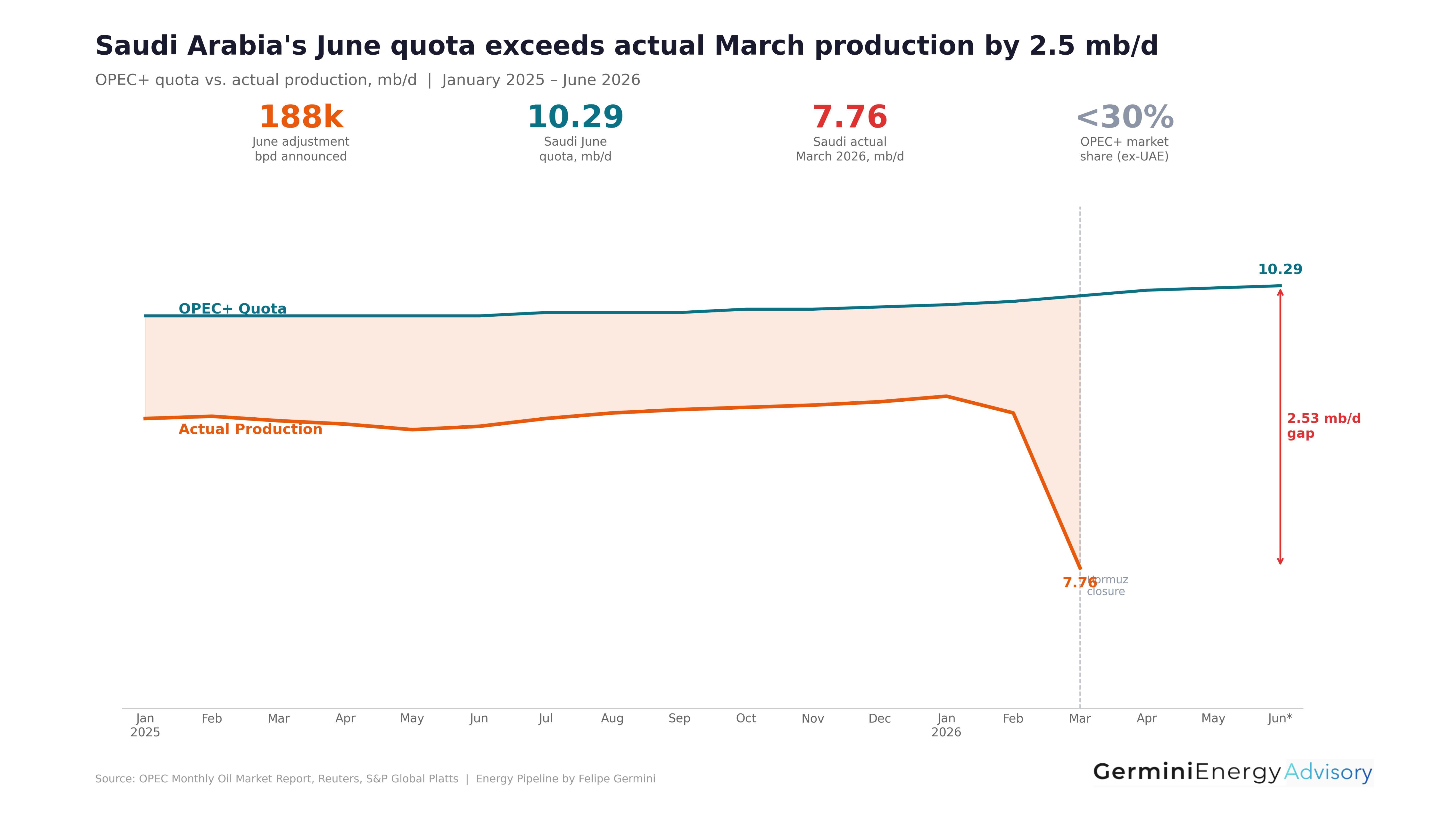
Chart 1: Saudi Arabia quota vs. actual production — the 2.5 mb/d gap
