
The Sanctions Firewall Just Cracked
Washington took three years to build its Russia oil sanctions regime. It took two weeks of Hormuz panic to punch a hole through it.

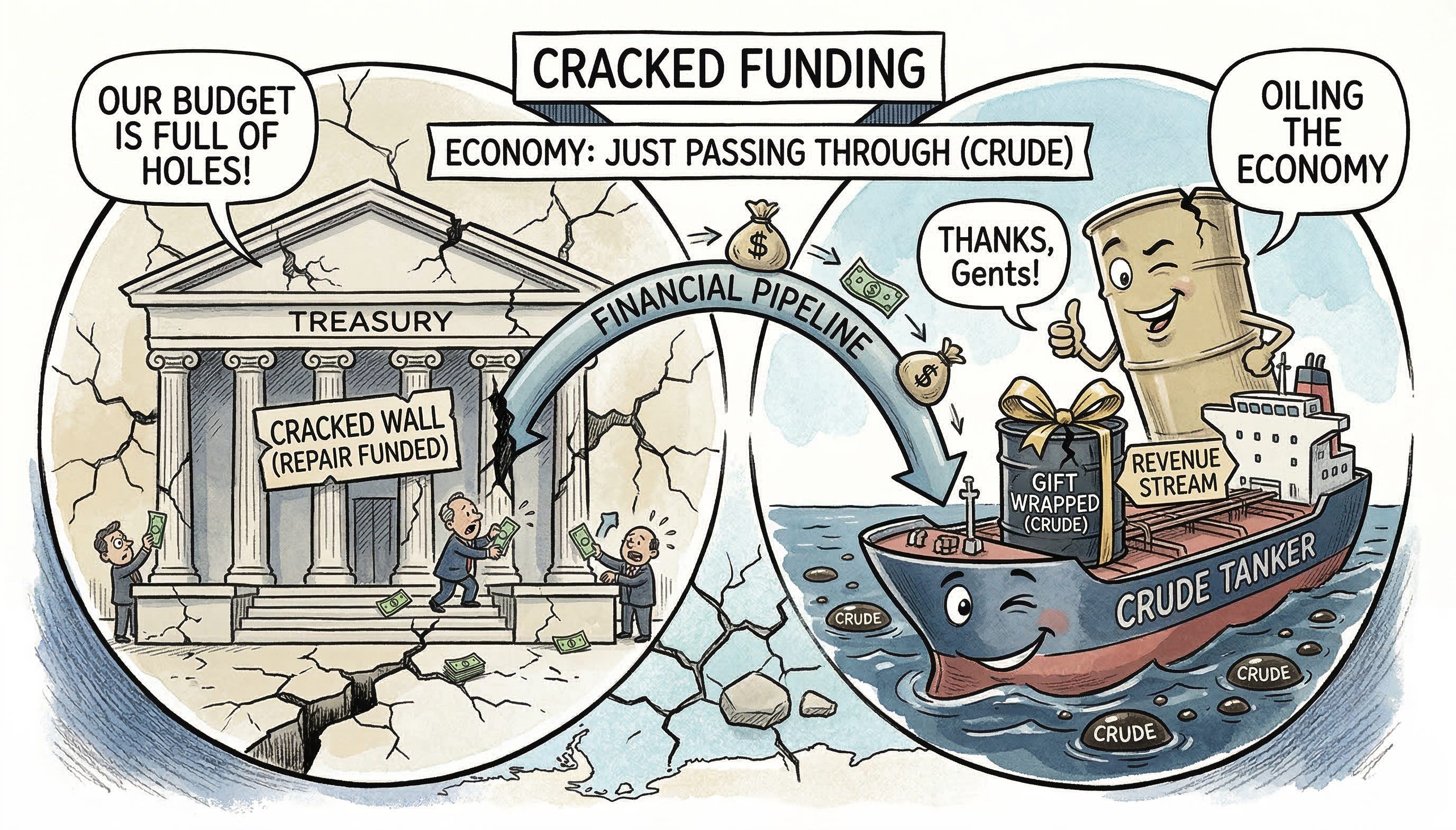
Scott Bessent called it “narrowly tailored.” The markets called it something else entirely.
On March 13 — fifteen days after US and Israeli jets struck Iranian targets and effectively sealed the Strait of Hormuz to tanker traffic — the US Treasury announced a 30-day waiver allowing the purchase of approximately 125 million barrels of Russian crude oil currently sitting on tankers around the globe. No new sanctions penalties. No secondary enforcement triggers. Just buy it.
Two days earlier, IEA member countries had agreed to release a record 400 million barrels from their strategic petroleum reserves. Brent crude barely flinched — it closed the week at $103.14 per barrel, up 62% since the strikes began on February 28. The SPR release was the largest in the IEA’s history. The market shrugged. And so Washington reached for the one lever it had sworn it would never touch: Russian oil.
———
Let me be blunt about what happened here, because the diplomatic language obscures the scale of the rever…
